Creepshow, Horror Joy, and Women in Horror: December Updates from My Writing World

Welcome back, and seriously, can you believe it’s already December? 2025 feels like such a blur in ways both good and bad. Because truly, what a year it’s been.

In my little corner of the world, there have definitely been some ups and downs, but I’m ending the year with a lot to be grateful for. I’ve had four book deals announced since April, which I assume will be a personal record for the rest of my career. I’ve had a wonderful time working with my amazing agent Elizabeth Copps. In terms of publications, I’ve had more than two dozen nonfiction articles through The Lineup as well as three published short stories. And last but in no way least, The Haunting of Velkwood won the Bram Stoker Award and was nominated for a Shirley Jackson Award and an Ohio Book Award. So truly, it’s been quite a year.

That being said, before 2025 takes its final bow, I have a few more announcements to share with everyone. And yeah, most of these have already been posted on social media, but I still have a blog, so why not put it to good use?

I’ll have a new story in the forthcoming Creepshow anthology!

This anthology was recently announced at Fangoria, which means I’ve been spreading the word ever since: I’m going to have a brand-new story in an official Creepshow anthology!

Seriously! This is real! As a longtime fan of Creepshow, this is obviously a huge deal for me. It seems a little like a dream to be part of the Creepshow canon, so I’m just going to continue floating on horror cloud nine. The anthology is due out in May 2026, and in the meantime, you can pre-order at the Monstrous Books page.

My story, “The Mouthless Body in the Lake,” from The Darkest Night is nominated for a SOVAS Award!

Here’s something I never thought I’d get to say: one of my stories is a SOVAS nominee! The SOVAS (Society of Voice Arts and Sciences) Awards are among the premier voice acting awards out there, sometimes likened to the Oscars of voice acting. As such, since this is a voice award, that means the main nominee is the incredible Stephanie Nemeth-Parker, who narrated my story, and truly, what a fantastic job she did. She’s beyond talented, and I feel so fortunate that she was the one to bring my story to life for The Darkest Night audiobook.

Each year, the award ceremony is held at the Beverly Hilton International Ballroom, the same place where the Golden Globes are hosted, so suffice it to say, I am pretty excited for this!

My tale, “A Mina for All Seasons,” is now available in the new issue of Dracula Beyond Stoker

As I mentioned above, I’ve had three new short stories released this year, and two of them just happened to be themed around Dracula. First, there was my Van Helsing re-imagining “All the Devils at Once,” released in the Vampire Hunters anthology from Speculation Publications back in the summer. Now my story, “A Mina for All Seasons,” has released from Dracula Beyond Stoker in their Mina issue. I’ve been a big fan of Dracula Beyond Stoker since they started, so it’s absolutely wonderful to be part of this latest issue. While I’m of course a major Lucy devotee, I’ve also always loved the character of Mina, so it was fun to explore her story from a very different perspective.

The Howl anthology has been unleashed on the world!

Howl: An Anthology of Werewolves from Women-in-Horror has officially hit bookshelves! I had so much fun doing a roundtable for the anthology earlier this fall, so it’s wonderful to see the book out in the world! In addition to stories from Christina Henry, Ai Jiang, and Delilah S. Dawson, the table of contents includes my tale, “Our Howls like Dirges, Our Eyes like the Moon,” which is an apocalyptic take on lycanthropy. Writing this one was a really great experience, and I can’t wait to hear what readers think of it!

The cover reveal for Dim Shores’ latest anthology

Dim Shores has recently unveiled the cover for their forthcoming anthology, Suffering the Other, and all the proceeds from the book will benefit the Transgender Law Center and RAICES. I’m so happy to say that my story, “My Sister, the Abyss,” will appear in the table of contents! It’s an honor to be in another Dim Shores anthology, and it’s so fantastic to see the proceeds from this book going to such worthy causes.

The Hotel Macabre Table of Contents reveal! Plus, ARCs!

The second volume of Hotel Macabre is due out in January from Crystal Lake Publishing, and I’m thrilled to be part of it. My story, “Ask Me About My Crypt, Now On Sale for Half Price!” is one of the weirdest things I’ve written over the past year, and I’m so excited about seeing it out in the world very soon. The ARCs for this one have already started going out, so I’m looking forward to what reviewers say about this anthology.

Appearance on Horror Joy Podcast

I was the guest on the recent episode of Horror Joy podcast. We talk all about the importance of joy and catharsis in the horror genre, and in the process, we also discuss The Haunting of Velkwood. This will probably be the last ever interview with me that focuses specifically on Velkwood, which is such a weird sentence to type. I’ve spent the last two years promoting that book, which is such a huge chunk of a person’s life. Needless to say, I’m very happy to be moving forward with my upcoming releases, but it was so nice to focus on Velkwood one last time with Horror Joy!

A Women in Horror Month Update

Women in Horror Month commences in just under three months, and once again, I’ll be celebrating here on this blog and on social media! If you’re interested in being included in any of our horror shenanigans, please send me a message on social media or via my Contact page. I want to include as many awesome female horror writers as possible!

So those are a few updates from my world at the moment. With 2026 truly only days away at this point, expect plenty more news from me, especially as I start promoting my second fiction collection, The Haunted Houses She Calls Her Own. So much horror, so little time!

Happy reading!

Cover and Pre-Order for My Second Fiction Collection, THE HAUNTED HOUSES SHE CALLS HER OWN

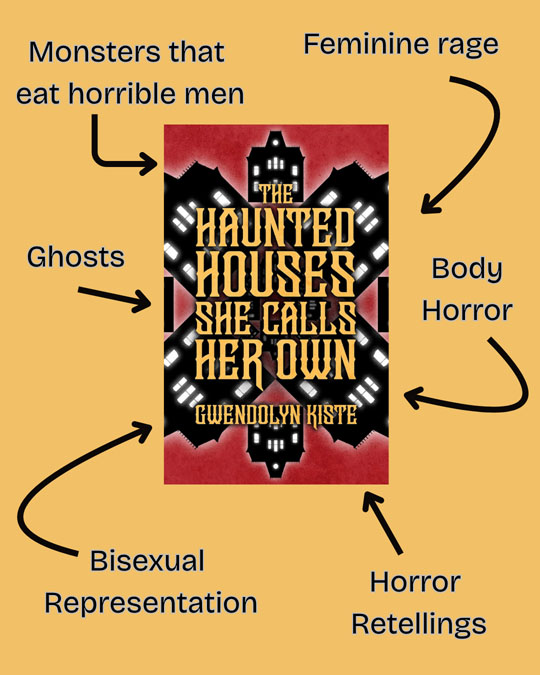
Welcome back! So you might have already heard—either on this very blog or on social media—but it bears repeating: I’m absolutely over the moon that my second fiction collection, The Haunted Houses She Calls Her Own, is due out on April 14th, 2026 from Raw Dog Screaming Press! It will be released exactly nine years to the day after my first collection, which seems like such lovely symmetry.

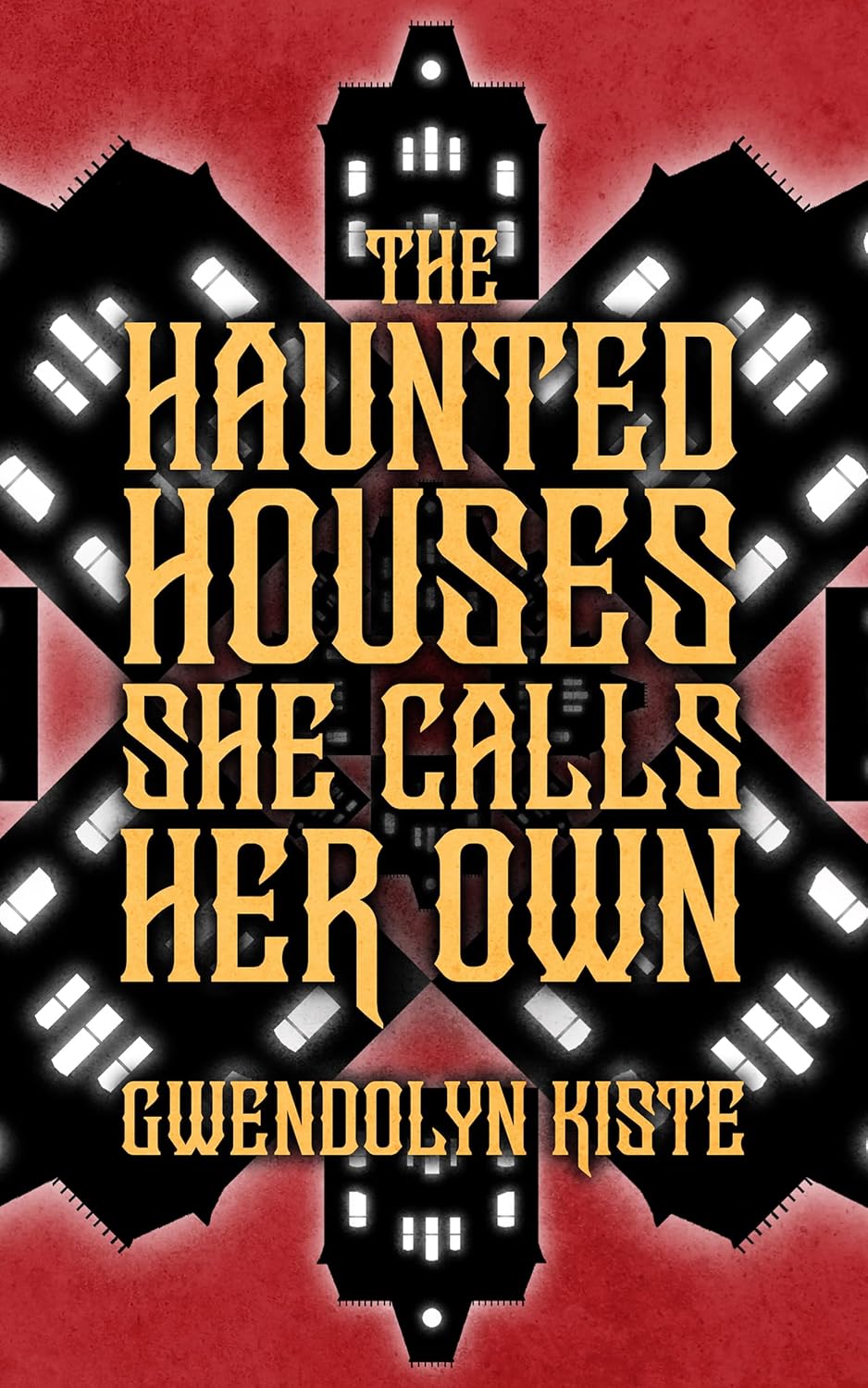
Last month, we unveiled the cover art for the collection, so just in case you haven’t seen it yet, here it is once again in all its haunted house glory!

The cover art is by Scott Cole of 13 Visions, and I’m absolutely in awe of it. This is truly such a cool cover, and it captures the spooky spirit of the collection so well.

*screams with horror joy*

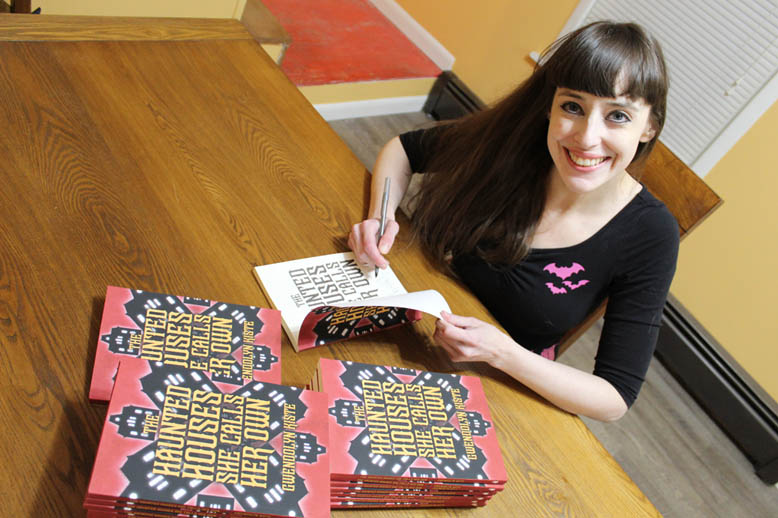
The pre-orders for the collection are already up for both the paperback and the ebook. And FYI: if you order the paperback edition directly from my publisher, Raw Dog Screaming Press, it will be autographed by yours truly.

Pre-order THE HAUNTED HOUSES SHE CALLS HER OWN from the publisher

Pre-order THE HAUNTED HOUSES SHE CALLS HER OWN from Amazon

There should also be a pre-order page coming soon from Riverstone Books in Pittsburgh, which is where we’re planning to host the launch party for the book, so I will be sure to share that link far and wide once it’s available.

I included the description of the book in my previous post announcing the collection, so if you’re inclined, please feel free to read that over here. But what I didn’t do in my last post about The Haunted Houses She Calls Her Own was discuss the specific tales that will be included. The collection features sixteen stories, three of which are brand-new. In terms of the reprints, that includes my Bram Stoker Award winning tale that re-frames the story of Dracula through the perspective of the ill-fated Lucy, which was the forerunner of course to my novel, Reluctant Immortals.

So without further ado, here are those sixteen aforementioned stories that will appear in the collection!

TABLE OF CONTENTS

“A New Mother’s Guide to Raising an Abomination”
“The Girls from the Horror Movie”
“The Sea Witch of the World’s Fair”
“The Eight People Who Murdered Me (Excerpt from Lucy Westenra’s Diary)”
“Melting Point”
“Her Skin a Grim Canvas”
“The Last Video Store on the Left”
“Ides”
“In the Belly of the Wolf”
“Sister Glitter Blood”
“The Mad Monk of the Motor City”
“Best Friends Forever”
“The Eleven Films of Oona Cashford”
“All the Hippies Are Dying”
“Lost in Darkness and Distance”
“The Haunted Houses She Calls Her Own”

We’re only five months away from the official release, and while that might sound like a while, it’s always so surprising to me how fast time goes. That means the book will be here before you know it. In the meantime, I’ll be talking more about the collection and the inspirations behind all of the stories. So expect a lot more joyous horror screaming from my direction as we count down the days until my haunted houses are unleashed upon the world!

Happy reading, and happy haunting!

Barking at the Moon: Part Two of the Howl Roundtable

Welcome back for part two of our Howl roundtable! Last week, we met our eleven featured authors and learned about their stories in the anthology. Today, we’ll talk all about the relationship between werewolves and femininity as well as what these amazing writers are working on next.

And with that, let’s take it away!

This is specifically a Women in Horror anthology. For you, what’s the connection between werewolves and the feminine? Do you feel they’re a natural fit?

A.C. WiseA.C. WISE: I do think there’s a natural fit between women and werewolves. There’s a lot of mythology connecting both women and werewolves with the moon, there are menstrual cycles and lunar cycles, but I think it goes beyond that as well. Puberty for people of any gender feels like a natural fit for a werewolf story, where your body suddenly changes in ways beyond your control and you almost become a stranger to yourself in some ways. There are links to be made between sexuality and werewolves as well, the idea of animal urges and hunger, or between family and werewolves with the idea of pack behavior. Werewolves are very versatile creatures when it comes to storytelling, as are many so-called monsters when you really think about it. One of my initial ideas for a story for Howl was around a werewolf who no longer transforms after going through menopause, but that story didn’t quite pan out. I might still go back to the idea someday.

AI JIANG: It’s funny because the first thing that came to mind when I thought of werewolves and the feminine is our monthly cycles—the way our emotions and bodies change and how (sometimes, depending on the person) become someone very different, somewhat different, only a little different than we are other days of the month. But I also think of the way the feminine is suppressed, is allowed to flourish, and the overall constraints on the feminine and how it fosters conditions of transformation, of pent up frustration and rage.

LINDY RYAN: For me, werewolves and the feminine are a perfect pairing. So much of being a woman is about cycles, transformation (body horror), and the constant pressure to be tame, polite, palatable. But under the surface, there’s rage, hunger, and wildness. When co-editor Stephanie M. Wytovich and I built this anthology, we did so around the idea of shedding our sheep’s clothing, embracing our monstrosity, and howling at the moon together—and as a pack, alongside some of our favorite women in horror to howl alongside us, to explore what it means to claim the beast inside rather than be shamed—or hunted—for it. For women, the werewolf isn’t just a monster—it’s a metaphor for survival, sisterhood, and liberation. It’s freedom. And that’s something we all need to be reminded of right now.

KAILEY TEDESCO: Sabrina Orah Mark wrote a fantastic essay in her Paris Review column called “The Postmenopausal Fairy Tale” about the presence of the big bad wolf archetype in fairy tales. The essay is so memorable, for me, because it highlights the ways that society scrutinizes, problematizes, and objectifies changing femme bodies. Werewolves seem to exist as an exploration of the somatic self. There also seems to be a recurring element of spectacle in most werewolf narratives where the transformation itself is examined through a specific and often dissective gaze. The very real horrors femme bodies are subjected to and have been subjected to since the beginning of time feels like a perfect analog for this human to animal transformation.

Stephanie M. WytovichSTEPHANIE M. WYTOVICH: When I look at the world and everything that’s happening right now, I can’t think of a better monster than the werewolf for women to turn to. Werewolves are creatures that live by cycles, embrace/fight transformation, and who seek power from within, often through exploring and accepting monstrosity and the fractured self; they’re also a metaphor for sexual violence, for hormonal disruption/pregnancy, and absolute, unfiltered rage.

CHRISTA CARMEN: So, again, with the lack of passion for werewolves that I suffered for a while, I only really personally explored their connection to the feminine with this story, “The Clearing.” However, like I mentioned above, as soon as Lindy and Stephanie mentioned this would be a werewolf-themed project, I made the immediate connection to the idea that I’d been working away at in my head for a year and a half, an idea that was very much connected to a very feminine experience.

Of course, I’ve always been aware that the connection between werewolves and the feminine was a strong one, explored by myriad artists, filmmakers, and writers. There’s the obvious connection between women’s menstrual cycles and the phases of the moon, as well as the idea that werewolf narratives serve as allegories for the fears and anxieties surrounding female sexuality. From a more empowering standpoint, werewolves are about reclamation, women embracing their wildness, strength, and independence.

My favorite connection, though, and the one on which I based my story, is the idea of werewolves as a stand-in for female rage. What the hell could be better, as a woman or person who identifies with the feminine, than having the ability to shed one’s skin and tear your enemies apart, to lose oneself in the dark of the forest, to howl at the goddamn moon while you know, in your bones, bones capable of shifting and reforming, that you and only you are in charge of your fate.

As long as you stay away from the silver bullets, that is.

WENDY WAGNER: Werewolf stories are always playing around with the hidden aspects of ourselves, the parts of us we hide away from polite society. I feel like Western society has a lot of opinions about what women are supposed to be like, and many of our earthier needs and urges are considered unfeminine. We often can only be our full selves in the dark.

SHANNON KEARNS: I absolutely believe the werewolf is connected to the feminine.  We transform with the moon cycles, not just the full moon. As I was healing my body after giving birth to my son, my intention was to align my bodily cycles with the moon phases. There is an intimate connection between the moon’s pull and our bodies’ response. The new moon is a time of release and shedding, calling in our shadow and revealing our inner darkness to be held with care and tenderness. The full moon, typically the time of the werewolf’s transformation, is a connection to power and illumination. There is nothing not feminine about this! I am so in love with the fact that this anthology will cast full moonlight on a rewriting of the werewolf archetype.

KATRINA MONROE: Moon cycles and monthly blood aside, the werewolf, to me, represents a barely-controlled rage, a simmering under the surface hidden behind a pretty façade. If that doesn’t speak to the feminine, I don’t know what does.

It feels right to claim the werewolf for the feminine, too, because, (unlike the vampire) the werewolf is harder to sexualize. She is protected by her fur and rage and animalistic instinct. She isn’t polite. She doesn’t assume the best intentions of the men around her. She is no longer prey, but the predator.

Donna LynchDONNA LYNCH: Certainly the bloody and painful transitions women go through make for an incredibly strong connection.

Women have also been conditioned to bottle up extreme feelings like rage lest we be harshly judged and stereotyped far more than men for our “outbursts”. When a woman expresses extreme emotions she is “crazy”. When a man does it it’s often because “he just couldn’t take it anymore”.

One part of my story that I struggled with was the inclusion of a violence-against-women trope, which I know is not only triggering but also overused. However, it was loosely based on something I know well and was my way of concluding a scenario wherein justice is done. And I think it’s an acceptable way, in this case, to cause the character to release her rage. It was going to take something horrific to make that happen, and as a woman, there are few things more horrific than the threat of violation.

JESSICA MCHUGH: I do. I think from the first time I read “Lila the Werewolf” when I was a kid, I’ve identified werewolves as feminine creatures. I saw The Howling pretty young too, so that probably had an influence. Now that I think of it, maybe that’s why I had a distaste for so many of the werewolf movies I grew up with. Not enough female werewolves! When Ginger Snaps came out, I was like, “This is more like it.”

What’s next for you? What projects do you have coming up? And where can we find you online?

A.C. WISE: The next thing coming up from me is my new novel Ballad of the Bone Road, which comes out in January 2026 from Titan Books. Looking backward a bit, I do actually have another werewolfish kind of story titled Wolf Moon, Antler Moon that was published at Reactor earlier this year (https://reactormag.com/wolf-moon-antler-moon-a-c-wise/). As for what I’m working on, I’m drafting a new novel, a maybe-novella, and a handful of short stories that are in various states of completion. You can find me online at www.acwise.net. I’m on BlueSky as @acwise.bsky.social and on Instagram as @a.c.wise.

AI JIANG: The second book in the Natural Engines duology, A River From the Sky, is forthcoming April 2026, and my debut science fantasy novel, An Empire Above Opera, is forthcoming September 2026. I have a few projects on deck that I’m working on at the moment or out on submission, so I excited to see the direction they take and where they land!

LINDY RYAN: My new novel, DOLLFACE, a suburban slasher pitched as Barbie meets Scream releases February 24th, 2026 from Minotaur Books! Till then, find me on IG @lindyryanwrites, as well as my monthly newsletter, and on Substack.

Kailey TedescoKAILEY TEDESCO: At the moment, I’m still in promotion mode for MOTHERDEVIL which can be found at White Stag Publishing or Asterism Books. I’m on a fall tour where I will be teaching workshops at several libraries across PA and NJ. I’ll also be reading and selling books at several performances of The Devil and Daisy Dirt across multiple cities in NJ. My newest project (currently untitled) is very slowly in the works, but a three-poem suite from this in-progress collection will be published in F(r)iction‘s fairytale themed issue later this year.

STEPHANIE M. WYTOVICH: I just finished a short story collection that I’m about to go on submission with (fingers crossed!), and I have my hands in some other projects that are just starting to get off the ground, but that I’m really excited about. Lots to look forward to!

Readers can follow me at https://www.stephaniemwytovich.com/ and on Twitter, Threads, and Instagram @SWytovich and @thehauntedbookshelf. You can also sign up for my newsletter at https://stephaniemwytovich.substack.com/.

CHRISTA CARMEN: My next novel, How to Fake a Haunting (sort of a ‘Lake Mungo meets Malevolent’ mashup…I know those are both horror film comp titles rather than novels, but they work!), is out Oct. 7th from Thomas & Mercer. I also have a story, “Comeback Kid,” in The Rack II: More Stories Inspired by Vintage Horror Paperbacks, edited by Tom Deady, and another anthology (or three) that can’t be announced yet.

Online, I’m at Facebook (https://www.facebook.com/christaqua/), Instagram (@christaqua), and Bluesky (‪@christaqua.bsky.social), as well as on my website, www.christacarmen.com.

WENDY WAGNER: I am always working on the newest issue of Nightmare Magazine, where we publish a wide variety of short horror fiction and poetry. I’ve got some books out on submission, and I’m scribbling away at another one. My online home is winniewoohoo.com.http://winniewoohoo.com

SHANNON KEARNS: After releasing my poetry collection just this past August, I would like to say I’m giving myself a short break from writing, but I’m not! I’m knee deep in a novel, a sapphic retelling of The Tempest, as well as beginning to compile and dream up new ideas for my next poetry collection. I am also an abstract painter and have two gallery openings this month! You can connect with me at shannonmkearns.com and on Instagram @shannon_mk_writer for more of my journey through writing and art!

KATRINA MONROE: As for writing, I am dabbling! Being between book contracts is scary, but it also is a bit exhilarating, being allowed to poke at several things to see which one bites back. Otherwise, I am working with a fabulous individual on an exciting women-in-horror project we hope to announce soon.

I’ve limited my social media of late, so can be found almost exclusively on Instagram (@katrinamonroeauthor).

Jessica McHughJESSICA MCHUGH: I’m currently writing an erotic horror blackout poetry collection / 3 Act Play called “FEAST,” created from the pages of “Wuthering Heights,” so I hope to have that out next year. Also, “Witches in the Warren,” the 3rd and final novel in my cross-generational horror trilogy, “The Gardening Guidebooks Trilogy” will be out from Ghoulish Books in 2026. It’s been wild saying goodbye to characters I’ve been writing since 2007, but I also feel incredibly grateful for the opportunity to bring this saga to a close. You can find me basically everywhere under @thejessmchugh, as well as mchughniverse.com. I look forward to wolfin’ out with you all!

DONNA LYNCH: As mentioned, writing is a laborious and sometimes unpleasant process for me (yet I’m compelled!) so I am SLOWLY working on another poetry collection. I thought I knew what it was about, but I don’t, so I have some things to figure out.

Also, we’re getting into the studio to work on a new album, which is also difficult, but necessary for me to do.

I have a lot of travel coming up with my various bands, so that eats up the year with a quickness. The road is my place of peace.

And that’s our roundtable! Please pick up a copy of Howl, which is out today, and enjoy all the werewolf transformations and bloody rage!

Happy reading, and happy howling! 


Hear Us Roar: Part One of the Howl Roundtable

Welcome back! This week, I’m thrilled to spotlight some of the authors from the forthcoming Howl: An Anthology of Werewolves from Women-in-Horror, edited by Lindy Ryan and Stephanie M. Wytovich. Full disclosure: my story, “Our Howls like Dirges, Our Eyes like the Moon,” is also included in the table of contents. But needless to say, I adore werewolves (after all, my next novel is a sapphic werewolf story), so it’s been such tremendous fun talking with these authors about their thoughts on lycanthropy, femininity, horror, and so much more.

The Howl anthology officially releases next week, so in the meantime, let’s meet our authors and howl at the moon together, shall we?

Tell us a little bit about yourself and your story in Howl.

A.C. WISE: Hello! I’m A.C. Wise. I’m an author and a reviewer. I write both long and short fiction, and I really enjoy genre-hopping and mashing up genres. When it comes to my story in Howl, I wanted to play with the idea of a werewolf story that may or may not be about werewolves at all. Depending on how you read the story, it could be literal, but it could also just be about the monstrousness of the expectations society places on people, especially young women, to behave and present themselves a certain way in order to be acceptable. On the literal interpretation side of things, I wanted to play with social media challenges and trends, and I thought it would be fun if the hot new thing everyone wanted to do was to become undead. From there, what happens if you don’t play by the rules and choose to become a different kind of monstrous creature other than the “socially acceptable” one?

AI JIANG: I am a Chinese Canadian writer born in Changle, Fuzhou, China, currently based in Markham, Ontario. My story in Howl is inspired by the way male expectations as well as societal conformations concerning how a woman “should be” restrict feminine nature and personality. But what I find most fascinating is that upon reflecting on the story after writing it, I realized that many woman in my family as also suppressed by the woman who came before them as they try to implement the same expectations they had to grow up with on their daughters rather than attempting to break free.

LINDY RYAN: Hi! I’m Lindy Ryan, author of Bless Your Heart, Another Fine Mess, and more, and editor of anthologies including  Into the Forest, Mother Knows Best, and Howl! My story “Bone Marrow” is a visceral coming-of-age tale where a girl, brutalized by her mother’s lessons on womanhood, ultimately sheds shame and embraces her feral, wolfish self beneath the moon. It’s a body-horror meditation on menstruation, motherhood, and reclaiming wild female power.

KAILEY TEDESCO: I’m a poet and professor currently living in Allentown, PA. My primary interests are folklore, the occult, horror cinema, pulpy lit, and fashion. My most recent collection, MOTHERDEVIL (White Stag Publishing), explores my experiences with PPD through the lens of Mother Leeds, the NJ Devil’s folkloric mother. This collection is currently (and gratefully) nominated for an Elgin.

I teach a course on witches in literature at Moravian University. Every semester my students and I engage with a thorough history of the Salem Witch Trials. I’ve taught this course over 13 times now, and every single time both the students and I find ourselves struck by the two dogs who were tried and put to death for witchcraft in 1692. The entirety of this history is horrific, but I think the fact that animals, too, were targeted causes us all to really confront the innocence and vulnerability of every one of the victims. It’s a harrowing moment. There are not a lot of known facts about the dogs or why, specifically, they were targeted. My story, “The Devil Has No Dogs” really begins in this space of curiosity and anger. I wanted to explore the story of the two dogs while also examining the hypocrisy and power dynamics during the trials as a whole. In the story, the dogs are imagined women who willingly engage with satanic witchcraft as a means of survival. Through this fiction, the dogs and the women are one, giving them each a power they otherwise would not have.

STEPHANIE M. WYTOVICH: Sure thing! My story is titled “13 Ways to Swallow a Full Moon” and it documents a woman’s life journey in an experimental narrative that discusses hunger, queerness, and acceptance. This was one of those times when the title came before the story idea, so it was exciting to help bring this feral little thing to life.

Christa CarmenCHRISTA CARMEN: I live in Rhode Island and am the Bram Stoker Award-winning and two-time Shirley Jackson Award-nominated author of The Daughters of Block Island, Beneath the Poet’s House, and the forthcoming How to Fake a Haunting, as well as the Indie Horror Book Award-winning Something Borrowed, Something Blood-Soaked, the Bram Stoker Award-nominated “Through the Looking Glass and Straight into Hell” (Orphans of Bliss: Tales of Addiction Horror), and coeditor of the Aurealis Award-nominated We Are Providence and the Australiasian Shadows Award- and Ditmar Award-nominated Monsters in the Mills.

My story in HOWL was actually something I’d had in my head for a while before Lindy and Stephanie invited me to be a part of the anthology. Not long after my first novel came out, I was killing time in a coffee shop before a bookstore event and got the idea for a place women could go to in their minds to escape from sexual abuse, coercion, rape, assault, etc. I jotted down an opening scene in the back of a notebook, but it was too abstract, too unmoored, and, frankly, too, well, toothless. It needed something else to make it work.

When the amazing editors of HOWL reached out to ask about my interest in the anthology, I immediately said yes, and not long after I started brainstorming for my story, I made the connection between this place women could go in their minds and transforming into a werewolf. I won’t say too much more because I don’t want to give the ending away, but suffice it to say that writing for this project was even more rewarding than I anticipated, because it allowed me to marry my passion for werewolves and my love of Lindy and Stephanie’s previous work with this interesting idea I’d been playing around with for more than a year.

WENDY WAGNER: I’m a lifelong resident of the Pacific Northwest, a place where people are intensely divided about wolves. Farming and ranching is really concentrated on the east side of the Cascade Mountain range, and people working in those industries have fought tooth and nail against the reintroduction and protection of wolves. Here in Oregon, there’s a lot of intense feelings and even violence centered around the issue—wolves have been illegally poisoned, shot, and trapped, and activists have faced really scary harassment.

One other weird thing about living in this area is that deep cultural divide is mirrored by the laws managing wolf management. There’s an actual line running through Oregon state where on one side wolves are an at-risk species whose management is regulated by federal laws that (currently) help protect them. On the other side, wolves are not at-risk, and they’re much less safe.

When I was invited to be a part of Howl, I instantly knew I wanted to write a story about the political reality of wolves in this part of America and what that would mean to a werewolf. But I also started writing this story at the same time federal abortion protections were removed, leaving in place a patchwork of state laws where women faced radically different laws in different places. The situations seemed so painfully similar I had to put them together.

Shannon KearnsSHANNON KEARNS: It’s such an honor to be a part of Howl! I’m in awe of the other amazing women in horror who are in this anthology. I write horror poetry and recently published my first poetry collection, The Uterus is an Impossible Forest, with Raw Dog Screaming Press, edited by Stephanie M. Wytovich. I’m excited to have two poems in Howl, “Waxing Moon,” and “Mad Woman.” My writing centers around my experience with birth trauma and postpartum depression. Both of these poems were written in response to my experience sitting awake with my son at all hours of the night, warding off anxiety and intrusive thoughts related to my PPD. I felt monstrous in those moments, and I reimagine the mother as a werewolf in these poems.

KATRINA MONROE: Super Moon takes place is the not so distant future, with a fascist regime at the helm of American government. Georgia, our very young main character, bares witness to the violence that comes to her front door when the moon draws closer to the Earth, causing women, in their rage, to change.

As for me, I’m a wife and mother of two almost-adult children, eyes fixed firmly on the door as I sharpen my nails and teeth.

DONNA LYNCH: I’m a writer and musician from Maryland, and while I primarily write horror & dark poetry, I enjoy getting to use my short story muscles now and then. Despite doing it my entire life, writing doesn’t come easily to me, so the process naturally puts me in a dark place—something I didn’t realize until recently. So, it’s a good thing I enjoy horror. Or maybe it’s why I write horror.

“Silver Boots” came to me a bit easier than usual, because I set it in the same universe as my story “Flood Zone” in the Baba Yaga anthology “Into the Forest”. That wasn’t my initial plan, but I quickly found my protagonist living in that world.

JESSICA MCHUGH: Greetings, friendos! Jessica McHugh here! I’m a 3x Bram Stoker Award nominated poet, as well as a novelist, playwright, and visual artist working under the speculative umbrella. But horror is my home. I’m so jazzed I had this opportunity to write a feminine werewolf story for Howl. I had previously written one I absolutely loved for the infamous pizza anthology, “Tales from the Crust,” so I was eager for the challenge to explore the topic again. For Howl, my story,A Town with Too Many Girls,” centers on Pascal, a lonely teen girl trying to hold it together in a town that despises her. Longing to feel like part of a pack, she suffers bullies and insults and ostracization, until a taxidermied wolf head gives her a glimpse into a different, wilder life.

Have you always been a fan of werewolves? Do you remember the first werewolf story or film you ever came across? Also, do you have a favorite werewolf?

A.C. WISE: I’ve always been a fan of all things monstrous and horror related, werewolves included. I know I encountered werewolf stories before this, but the first one that really sticks out in my mind is Wolf, the 1994 movie starring Jack Nicholson and Michelle Pfeiffer. I haven’t tried to re-watch it recently. There’s a good chance it doesn’t stand up and that it’s truly horrible, but high school me adored it and re-watched it several times. As for a favorite werewolf, does Bigby Wolf from the Fables series by Bill Willingham count? He might be more werewolf adjacent, but he’s a fun character, so I’m going to go with that as my answer.

AI JIANG: Werewolves were always interesting creatures to me, but I never really saw them on their own, usually depicted next to vampires like in Twilight, and because the vampires were often the protagonists, the werewolves were always depicted more so as antagonists. As for a favourite werewolf, I’d say Chul-soo from A Werewolf Boy.

Lindy RyanLINDY RYAN: What girl doesn’t love werewolves, really? Myself, I’ve always loved the mix of fear and freedom. The first werewolf film I remember seeing was Silver Bullet, based on Stephen King’s novella, Cycle of the Werewolf—still a fave, but not one that serves a female reader. That belongs to Ginger Snaps, which came along and made girlhood feel feral in a way I connected to (and still do).

KAILEY TEDESCO: I am such a huge lover of dogs, so you would think werewolf narratives would have always been a fast favorite for me. In many of the earlier werewolf films I’d seen, though, the animal was usually villainized and then harmed or killed. I’ve always had an especially hard time with that.

When I was an undergrad, my Brit Lit professor introduced me to Angela Carter. It was through her fiction that I really saw the magic in werewolf narratives. The Company of Wolves became an easy favorite of mine. I also love Ginger Snaps and I think the werewolf transformation scene in season one of Hemlock Grove is peak body horror.

I most love werewolf narratives where the wolf is treated with humanity and their anger is validated. 

STEPHANIE M. WYTOVICH: While I tend to be Team Vampire, the wolf has been one of my favorite animals since I’ve been young. I’ve always had a pack of dogs around me, I’ve been obsessed with the moon for as long as I can remember, and I have a wolf pendant I keep close on my body (I even wore it when I gave birth to my daughter).

Watching An American Werewolf in London was instrumental in my love for monsters, and I remember first learning about it when I went to Universal Studio’s Horror Make Up Show. They talked about Rick Baker, who won the Academy Award for Best Makeup for David Kessler’s (played by David Naughton) infamous transformation scene. After seeing that, I was hooked, and when I later found out that Baker also worked on The Wolfman (2010) and Michael Jackson’s “Thriller,” well, the man is just a legend.

Ginger Snaps came out in 2001, and I vividly remember watching it in my parent’s living room. There’s a line where Ginger says to Brigitte: “I get this ache… And I, I thought it was for sex, but it’s to tear everything to fucking pieces.” I remember smiling and smiling, and just nodding my head like there, someone gets its! From that point on, when I think of female rage, I always think of her. My queen.

CHRISTA CARMEN: I am embarrassed to say that I actually had a weird aversion to werewolves for a while. I think I consumed a few lame films and/or novels (and the Twilight films were all the rage from when I was about 23 until I was about 28, so I think that went a long way toward turning me against them), and I’ve been working to make up for that bias for the last few years.

Matthew Brockmeyer and I cohost a true crime podcast called Murder Coaster, and we also cover a lot of just general mysteries, strange occurrences, and horror-related fare. Two Octobers ago, we did an entire month’s worth of werewolf-related episodes (and Gwendolyn, you were actually a part of our bonus “Horror Writers on Werewolves” episode!), including a fun grab-bag episode in which we went through the history of werewolves in film, and that helped a lot in introducing me to everything I’ve been missing out on in terms of werewolf lore.

With that being said, I think my most recent favorite werewolf I’ve come across is Rory Morris from Rachel Harrison’s Such Sharp Teeth. I’m a big fan of Rachel’s work (and, of course, she wrote the introduction to HOWL, and it’s unsurprisingly amazing), and I found Rory to be relatable and likeable with how she approached both transformation and her regular ol’ human life.

Wendy WagnerWENDY WAGNER: I was obsessed with werewolves when I was a kid. I really wanted to be one! I’ve always loved animals, so the idea of being able to shift back and forth between humanity and the world of the wild animal always sounded really amazing.

It’s hard to know what the first werewolf book I ever read was. My hunch is that it might have been Charles L. Grant’s The Dark Cry of the Moon—I read his whole Universe of Horror trilogy, and I was obsessed with them. The covers were fantastic.

There are so many wonderful werewolves to love, but my favorite is probably Karen from Emil Ferris’s amazing My Favorite Thing Is Monsters. That graphic novel operates at the border between magic realism and speculative fiction, so it’s hard to know if Karen is truly a werewolf, but she sees herself as one, so I will accept her truth. Plus, she’s the cutest werewolf I’ve ever seen.

SHANNON KEARNS: I have long been drawn to the symbology of the moon, and the way the female body responds to its cycles. When I was growing up, the werewolves I encountered in stories were often depicted as males. I loved the story of Remus Lupin in the Harry Potter series. Later, reading Rachel Harrison’s Such Sharp Teeth was a point of inspiration to reimagine the archetypal werewolf as female.

Katrina MonroeKATRINA MONROE: This might be an unusual answer, but the first character I thought of was the wolf in Little Red Riding Hood. Much of my horror consumption is fairy tale or gothic in nature, and while it’s not explicit in the story, Red’s wolf feels very were-like as it crawls beneath the covers in the grandmother’s clothes.

Recently I’ve fallen in love with the character of Enid in Wednesday on Netflix. A late-blooming teen werewolf who just wants to be part of a pack. She’s loyal and fierce, but also unapologetically herself.

DONNA LYNCH: I remember constantly checking out a folklore book from the elementary school library that had woodcut-style illustrations of werewolves dismembering and stealing away with Medieval village children. It was terrible and fascinating.

And in my ‘favorite films of all times’ list is ‘The Company of Wolves’. The whole film is a fever dream masterpiece thanks to Angela Carter’s story and Neil Jordan’s direction, but there are segments that became my entire personality for many years. Specifically, Danielle Dax’s young wolf girl who quickly learns she’s not meant for the world of man, and the witch who takes revenge of a wedding party.

The Red Riding Hood tale has a huge place in my heart because of being raised at times by only my grandmother and my mother—three generations of women who had to learn to fend for themselves in the woods, with many successes some painful failures.

JESSICA MCHUGH: I’ve never been a big werewolf fan, actually, so I don’t think I have a favorite, but I am very glad that werewolf stories exist because there’s so much within the lore to explore and expand upon. I always loved Silver Bullet—that was probably the first one I remember really enjoying, in film and prose—along with the Peter S. Beagle story “Lila the Werewolf,” silly as it is. Plus, the werewolf transformation in the bonkers show Hemlock Grove is insanely cool, and “Teen Wolf” is pretty rad.

Join us next week for the official release of Howl as well as part two of our werewolf roundtable! 

Happy reading, and happy howling! 

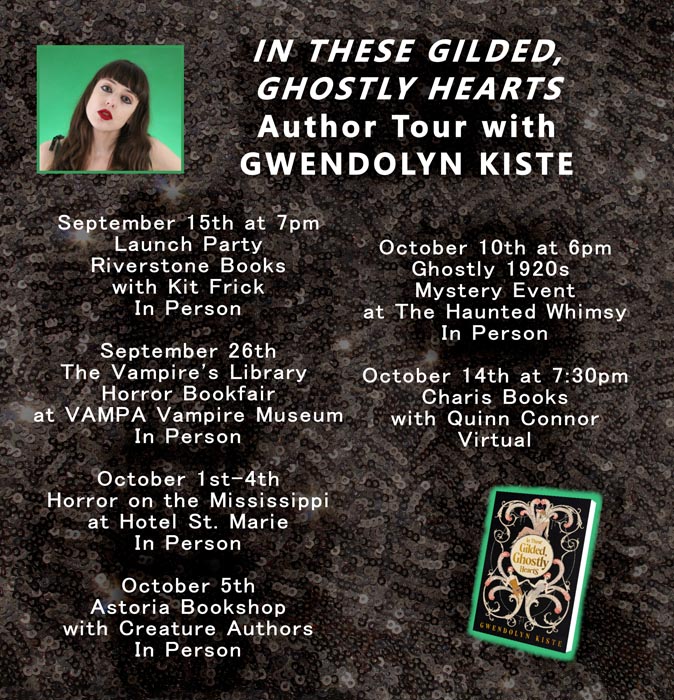
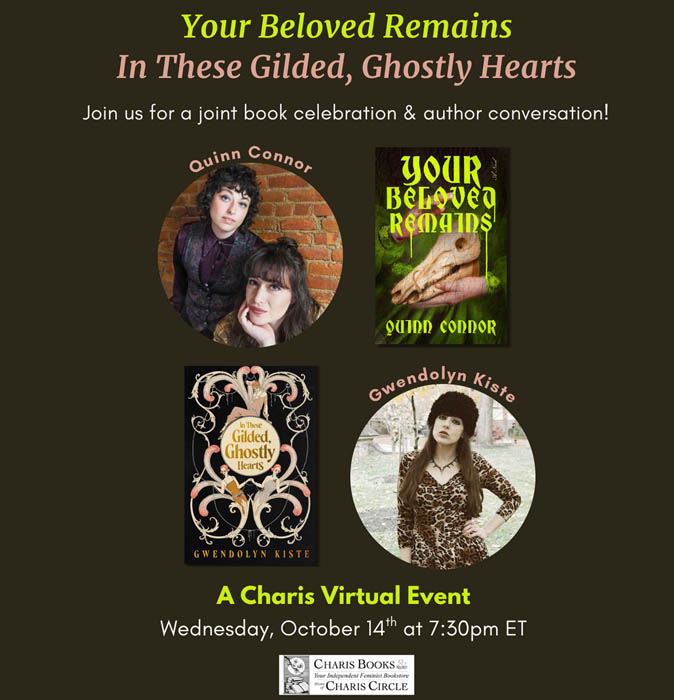
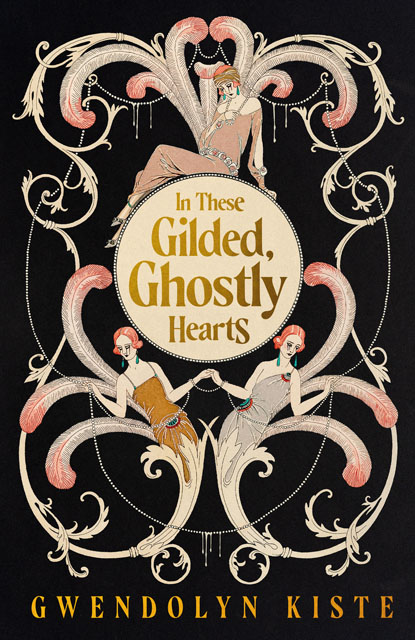
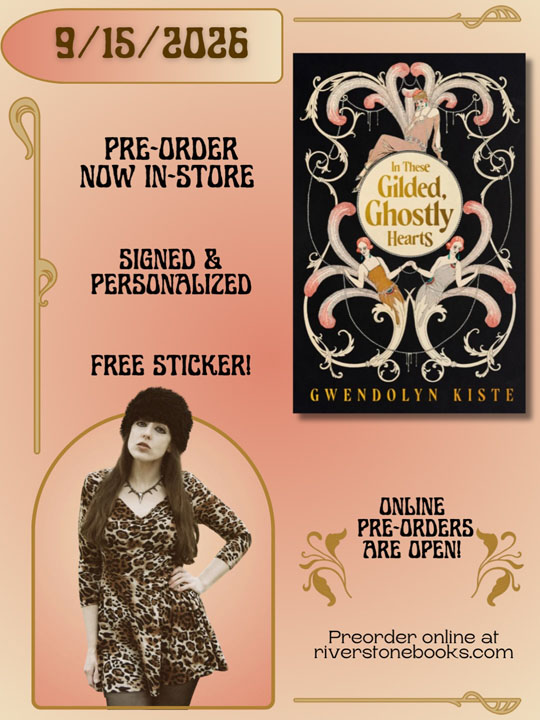
My Gatsby-inspired novella, IN THESE GILDED, GHOSTLY HEARTS, is coming in 2026 from Creature Publishing!

So I’ve already announced this news over on social media, but just in case you missed it, I’m so thrilled to say it again: my Great Gatsby-inspired novella, In These Gilded, Ghostly Hearts, has sold to Creature Publishing!

*does a ghostly Charleston dance all daylong*

Needless to say, I’m absolutely over the moon about this book! We pitched this one as Carol meets The Haunting of Hill House with, of course, plenty of Gatsby vibes. I came up with this concept over five years ago when I first heard The Great Gatsby would soon be entering the public domain, so it’s been so wonderful to finally see the story come to fruition.

In These Gilded, Ghostly Hearts is at once a queer re-imagining as well as a sequel to the original novel, with the story told this time through the perspective of Pamela “Mel” Buchanan, Daisy and Tom’s oft-forgotten daughter. I always love retellings that reclaim a lost character from the original, and Daisy’s overlooked daughter seemed like such a perfect way to explore the legacy of family trauma and how secrets pass down through the generations. All with lots of ghosts haunting Gatsby’s abandoned mansion, of course.

As a side note, it was a little bittersweet this week, because I’ve been working on some edits for the book, and I had to do it while mourning the fabulous Robert Redford who most certainly played my favorite version of Jay Gatsby. If it wasn’t for the pink suit he wore in the 1974 adaptation, I’m not sure I’d be the person I am today. At fourteen years old, that pink suit changed my life, and it also immediately kickstarted my love for all things Gatsby.

So in honor of all the Gatsbys that came before, here’s a bit of a teaser for my own re-imagining of the classic story!

It’s 1955 in New York City, and Mel Buchanan is desperate to forget all about her dysfunctional family. By day, she works at a dry cleaners with her best friend Vera, and the two of them are making plans for the future–a future Mel hopes might include more than just friendship between her and Vera. But when her mother Daisy Buchanan is found dead in an abandoned West Egg mansion, Mel must confront the literal ghosts of the past as she unravels the mystery of what happened to her mother and why there’s an ethereal party hosted night after night that only she seems to be able to see. With the help of her mother’s best friend, Jordan Baker, Mel soon finds herself in over her head, drawn into the web of a phantom figure named Gatsby. As the past and the present collide, Mel must reckon with her family’s sordid history, including lies, illicit affairs, and even murder, before she becomes the latest partygoer to disappear into the night. Because this particular West Egg mansion has always been hungry, and it’s more than eager to devour Mel Buchanan whole.

In These Gilded, Ghostly Hearts will be out in Fall 2026 in paperback and ebook! That’s right: we’re just one year away from my Gatsby ghosts making their way into the world! So that means you’ll be hearing a lot more from me about this spectral novella in the coming months!

*Charleston dances off into the sunset*

Happy reading, and happy 100 years of The Great Gatsby!

My horror novella, WHEN WE WERE BRUTAL, is coming in 2027 from Shortwave Publishing!

So I’ve already been screaming from the rooftops about this, but just in case you missed it: earlier this year, I was seriously over the moon to announce my brand-new horror novella, When We Were Brutal, coming in summer 2027 from Shortwave Publishing!

*shrieks merrily for joy*

My last widely released novella was Pretty Marys All in a Row way back in 2017. (I did have a limited-edition novella, In the Rose-Colored House Where They Died, from the truly fabulous Thunderstorm Books, but that was limited to 45 copies and has long been sold out.) So it will be a total of TEN YEARS between Pretty Marys All in a Row and When We Were Brutal, which kind of blows my mind.

So let’s talk about When We Were Brutal, because seriously, this is beyond a doubt one of my favorite things I’ve ever written. It’s an ode to the kind of rage-filled female-centric horror that I love so much. It literally started with the question of “what if Jennifer Check and Carrie White didn’t die at the end of their stories?” From there, it turned into an exploration of toxic friendship, sapphic longing, middle age, and learning how to live with the past in order to move forward.

And since my work sometimes doesn’t end up categorized as such, I’m going to say this loud and clear right now: there’s most definitely queerness in When We Were Brutal. This is absolutely a queer book. A bisexual book. Which honestly, how could it not be bi, considering it was inspired in part by Jennifer’s Body?

At any rate, for those of you who would like to know a little more about the book, here’s a bit of a teaser for everyone!

An homage to Carrie, Jennifer’s Body, Ginger Snaps, and all the monster girls who never got to leave high school, WHEN WE WERE BRUTAL is all about the toxic bonds of best friends, growing up and growing older, and what it means to be the boogeyman lurking in your own town.

Delilah Fisher was always the weird girl, the one who got pushed down in the school hallway, taunted mercilessly by her peers. Meanwhile, her best friend Bonnie Smolak couldn’t be more different: sweet and popular and perfectly normal. But growing up, the two of them were inseparable—that is, until the night four high school boys ended up burned to death at the local roller rink after attacking Delilah. No one could explain how it happened, but the town of Newland Falls still blamed the strange Delilah, which caused a frightened Bonnie to flee town as soon as she could.

Now it’s thirty years later, and Newland Falls is preparing a memorial celebration to commemorate the tragedy. With her job as a television reporter on the line, Bonnie returns home for the first time since graduation to cover the event for her news station. She’s desperate to avoid Delilah, but with long-buried secrets rising from the grave, the two slowly rekindle their bond, all while the simmering rage of the town is ready to boil over, threatening to destroy Delilah and her supernatural powers once and for all.

So at this point, we’re still two years from the release, which might seem like a long while, but the truth is that time will go by way too fast. That’s one of the shocking things about a writing career: releases feel like they won’t be here for forever, and then suddenly the book is out and the promotion cycle is over, and it’s wild how life goes by in a blink. So needless to say, you’ll be hearing more from me about this book over the coming months. I’m looking very forward to spreading the word about this one!

Happy reading!

My Schedule for StokerCon 2025

So we’re only a week away from StokerCon, and needless to say, I’m very excited about it! As always, it will be so great to see everyone at the convention!

I’ll be part of a number of events next week, so here’s where I’ll be at both the in-person StokerCon on Friday and Saturday as well as the virtual StokerCon! (Side note: isn’t it too perfect that StokerCon takes place over Friday the 13th?!?)

Final Girls and the Ferocious Feminine: The Heroines and Female Villains of Horror at Virtual Stokercon
I was positively thrilled to moderate this one a couple months back, and it was truly such a fun and fierce discussion about female characters and female authors. The panelists included V. Castro, J.A.W. McCarthy, Candace Nola, May Walker, and Sara Tantlinger. This one will be part of the on-demand section of the Virtual StokerCon, so if you’re attending online, please check out our panel!

Industrial Gothic: Horror in the Industrial and Post-Industrial Age on Friday, June 13th at 1pm
Moderated by Leanna Renee Hieber, I’ll be joining fellow panelists Paul Magnan, Victoria Dalpe, and Errick Nunnally for this super cool discussion about the gothic in industrial settings. This one is all about the decaying landscapes of America and how the abandoned factories and other industry has left the country looking like a bit of a haunted house. As a Rust Belt girl myself (and author of The Rust Maidens), this panel is truly right up my alley!

Shadowy Corners and Secret Liaisons: Representations of Bisexuality in Gothic Horror on Friday, June 13th at 2:45pm
Once again, I’m over the moon to be presenting at the Ann Radcliffe Academic Conference. Two years ago, it was bisexual vampires; last year, it was liminality and bisexual horror; and this year it’s gothic horror and bisexuality. Specifically, I’ll be talking all about the bisexual characters in Rebecca, The Uninvited, The Haunting of Hill House, and more, all while exploring what these depictions of bisexuality mean both to the horror genre and to the queer community.

Fowl Play: Birds in Horror on Saturday, June 14th at 11am
Moderated by the incomparable Sara Tantlinger, this one is going to be an absolute blast! I’ll be a panelist alongside Douglas Gwilym, K.P. Kulski, Christa Carmen, and A.C. Wise, and we will be discussing one of my very favorite topics: birds in horror! I am literally a writer who has a novel that opens with birds falling from the sky, so no promises that I won’t work my witchcraft and try to coax a murder of crows to the hotel just for the occasion!

Runnin’ with the Devil on Saturday, June 14th at 12pm
I’ll be moderating this super fun discussion about 1970s horror music. Think Warren Zevon, Alice Cooper, Stevie Nicks, Ozzy Osbourne, David Bowie, and more. We’ve got a delightfully large panel for this one, which includes Sara Tantlinger, Douglas Gwilym, Nat Cassidy, Philip Fracassi, David Simms, Renee S. DeCamillis, and Michael Allen Rose, so stop by for our very lively and musical discussion!

And finally, on Saturday night, we’ll be attending the Bram Stoker Awards! I know I’ve already said it plenty of times, but I’m so thrilled and honored that The Haunting of Velkwood is nominated for Superior Achievement in a Novel. It’s such a wonderful ballot, and I’m so happy that I get to be part of it!

So that’s where I’ll be next week! Also, FYI: the same as last year, I’ve opted out of the mass author signing, mostly because I already have plenty of panels (not to mention travel), so I don’t need to overtax myself. That being said, if you see me around the convention, please say hello! I’m not too terribly scary in person, I promise!

Happy reading, and happy StokerCon!

My second fiction collection is coming soon from Raw Dog Screaming Press!

So in case you missed it, I have some news. Some very big news. My second collection, The Haunted Houses She Calls Her Own, is due out in spring 2026 from Raw Dog Screaming Press.

Yes, a second collection. Yes, it’s finally happening. And yes, I get to work with one of my favorite presses for the very first time.

*screams merrily for joy*

Seriously, I couldn’t be more excited about this. It’s been eight years (!) since my first collection.  EIGHT. YEARS. I can’t believe it’s been that long, but needless to say, having a new collection finally on the way is an absolute dream come true.

And if that wasn’t enough, it’s so thrilling to be working with Raw Dog Screaming Press on Haunted Houses. I’ve admired RDSP’s amazing books for years and years. Both Jennifer Barnes and John Edward Lawson are such rock stars in the horror community, so to be working with Jennifer on this book is such an honor and so very, very cool.

Raw Dog Screaming Press also announced the deal over at their blog, saying “This landmark collection is a legacy book that exemplifies Kiste’s impact on modern literature and in particular the horror genre.” Wow. I mean, those are some incredible words for someone to say about your work. There’s nothing better as an author than having a publisher that genuinely appreciates and supports your writing.

For anyone who wants a sneak peek into the book, I’ll give you a bit of a teaser. The final back cover copy will likely change before we go to print, but here’s the original write-up from when we were sending the collection out on submission.

Two outcast sisters discover a glittery board game that holds the key to their salvation—or their destruction. Hollywood’s most famous ghost is forced to relive her death, night after night. Dracula’s forgotten first victim finally tells her side of the story. A lonely video store owner learns that nostalgia comes at a frightening cost. A cult filmmaker goes missing, and after a screening of her latest film, so do her most devoted fans.

In her second collection, Gwendolyn Kiste explores the vast and strange American landscape and beyond, uncovering the ghost of Rasputin hiding in Detroit, a group of little girls who become monsters before their mothers’ eyes, and a beheaded Marie Antoinette who stumbles right into the middle of Lord Byron’s ghost story contest. Featuring reworkings of some of literature’s most famous stories, including an apocalyptic retelling of Julius Caesar as well as the Bram Stoker Award-winning story, “The Eight People Who Murdered Me (Excerpt from Lucy Westenra’s Diary),” these sixteen tales reconfigure every horror possibility, exploring the grief and heartache that lurks in the shadows, waiting to devour us whole.

Over the coming months, I will of course keep everyone updated with news about the cover reveal, pre-orders, and ARCs! So please keep your eyes peeled if you’re so inclined. And as always, thank you for coming with me on this crazy ride of a horror-writing career! Your support is appreciated more than you’ll ever know.

Happy reading!

Real-Life Horrors and Beyond: Part Two of Our Women in Horror Month 2025 Roundtable

We’re heading into the homestretch of Women in Horror Month, but we’re not done yet! Today, we’re back with part two of our awesome roundtable featuring nine amazing female horror authors. Below, we talk more about villains as well as what these amazing women have planned next!

Do current events creep into your villains as you’re writing them, or do your villains serve more as a kind of escapism? Or perhaps a bit of both?

LIZ KERIN: I think current events always seep into them, particularly nowadays when there are so many real-life villains creeping around. That said, I feel like you kind of have to hide the ball. The inspiration can’t be 1-to-1. I’ll pull traits from a couple different real-world deplorables and toss them in a dark fantasy blender. For example, General Simeon in THE PHANTOM FOREST is playing both sides, trying to appease the gods while he supports a fascist regime that actively seeks to eradicate them. He’s an opportunist whose loyalties can turn on a dime. It’s probably pretty obvious who this reminds us of. But I do try to hide the ball behind horror/fantasy tropes whenever possible.

SHANTELL POWELL: God is an unseen but ever-present villain in my novel-in-progress The Everwhen, an intertextual retelling of the Great Flood story. The story draws upon current events: climate catastrophe, mass extinction events, and wars spurred by limited resources. I started writing it as a means of dealing with my religious trauma and climate anxiety. Writing it has been therapeutic and cathartic. The same goes with my novella-in-progress The Development, which reads like a cross between “The Yellow Wallpaper” and a Cronenberg flick. This modern gothic story addresses the ongoing destruction of the Green Belt in southwestern Ontario and the isolation of a climate refugee living in suburban sprawl. The villain is the unchecked capitalism, car culture, pollution, and political corruption which endanger us all.

JENNY KIEFER: A little of both. I’m also a bookseller, and tend to notice unintentional trends across books every year, like there’s some zeitgeist infecting everyone. A couple years ago — just a few years after lockdowns in 2020 — there were a lot of parenting books. There’s a lot of religious horror coming out, including American Rapture, This is My Body, and others, including my forthcoming book Crafting for Sinners. And I think horror is inherently political, so sometimes even if it wasn’t entirely intentional, it’s still there.

My debut, This Wretched Valley, has elements of (light) eco-terrorism, if you consider the humans in the story to be villainous. My next book’s villains are very much based on current events or real-life groups that want to do harm… but I hope it’s as cathartic to read as it was to write.

ZIN E. ROCKLYN: A bit of both. I tend to want the escapism of my work, but I can’t help but have the incredibly dangerous times leak in as well.

FRIDAY ELLIOTT: I’d say a bit of both! My “villains” may have human faces sometimes (though more likely to be transdimensional monsters, the Catholic church, or even nature itself), but I would say that “current events” are certainly the villain themselves more often than not. I guess I see villains as effigies for our fears: a representative of a greater concern we can look in the face and put in a tidy, fightable package.

CARLIE ST. GEORGE: Maybe a bit of both? “Creep” might be exactly the right word here. I can only think of one story offhand that I wrote as a conscious response to current events, but I do often reread my stories as I edit them and go, “… ah, I see where this is coming from” or “… oh, it appears I’ve written this particular theme. Again.”

SONORA TAYLOR: My villains usually give in to the worst impulses that lots of people feel but don’t act on (or at least, don’t act on in ways that hurt others). They’re humans unchecked, and I often make them women because it’s interesting to think how little women would need to do to be labeled as a villain when they lose control even though they get pushed so much further and so much more often than the average man.

MAE MURRAY: Because so much of my writing is drawn from my own experience, I think it’s inevitable that my villains are directly tied to what is going on socially and politically.

CYNTHIA GÓMEZ: I guess my above answer kind of tackled that one! But, seriously: I think that as long as we’re forced to live under a system that creates these monsters, we’re going to see them come up in our fiction, consciously or not. And, yes, for me it’s a bit of both. I wrote a story that’s wending its way through submission land right now that’s about a wealthy CEO who gets composted by his own trees, and where something very… interesting happens to the fruit that comes from those trees. It was fun to both create that villain, borrowed from and inspired by real people – but definitely my own creation – and also to daydream about the spark of hope that might come from some of these horrors. I’m really into fiction as daydreaming and wish fulfillment.

The world is filled with a lot of real-life villains right now. In your opinion, what’s the role of horror when things are so grim?

LIZ KERIN: Here’s what I love about villains, in both the real world AND in horror: they always seem to fall on their own sword. They chase away their supporters with their erratic behavior and have too much pride to ask for help. They make rash decisions out of anger and nervousness. The role of horror is to remind us that these monsters, both real and imagined, all have an Achilles heel. They can, and WILL, screw something up. The serial killer will get sloppy and leave evidence. The vampire will accidentally expose himself to sunlight. When this happens, it’s up to us to seize the moment and take our power back.

SHANTELL POWELL: I think horror provides a safe medium for readers to confront their anxieties. Horror can also educate. It shines a light on issues folks would not have otherwise considered, or it provides new perspectives on those topics. I’m a huge fan of literature written by folks outside the status quo. Amplify marginalized voices. Their wisdom is vital.

JENNY KIEFER: I have always used horror as a way to channel my anxieties. It’s a way for us to control the narrative and pick the ending. Sometimes it’s a way to stretch intrusive thoughts further into the realm of the weird or fantastical. I think there’s going to be both ends of the spectrum. You’ll have books that directly push against these real-life villains with more direct representations of the villains or stories, and you’ll have others that are more opaque allegories. Horror can be both a way to push against the status quo and a form of escapism.

ZIN E. ROCKLYN: Horror is that escape, that catharsis that teaches the evil a lesson. Evil doesn’t exactly mean villain either. Good stories make you question which is who.

MAE MURRAY: I can say that the kind of horror I like to write and read doles out some kind of justice to the real-life villains who feel untouchable. I think it serves a similar function as a person posting a photo of a guillotine. The person posting that photo probably won’t be erecting a guillotine in the town square, but it’s nice to dream that someone somewhere is making building plans.

FRIDAY ELLIOTT: Horror’s great gift to its consumers is catharsis. I really believe that a great number of horror lovers are most drawn into the genre in order to process difficult concepts and feelings. Sure, horror is fun and there’s simple appeal to a scare (hence funhouses, right?), but horror as a media genre, an area of immersion and contemplation, I think serves a deeply therapeutic role for a lot of folks. I know it does for me! My favorite subgenres, tropes, and subject material in the horror space are always directly linked to my personal traumas and anxieties. Horror gives us a place to unpack the ugliness and the fear, process it, and wrap it back up again. When the world is extra grim, horror seems to me an extra healthy and necessary outlet.

CARLIE ST. GEORGE: I don’t know if horror has one specific role, exactly. Sometimes, we need scary stories that are just as angry and hopeless and afraid as we are. Other times, we need stories where people defeat the evil, come back from the dead, survive the night. And other times we just need some silly, gory escapism to take a break from all the many, many real-world atrocities. Whether you come to horror for truth, comfort, validation, or any combination thereof, it can be a safe place to work through your anxieties, your trauma, your rage.

SONORA TAYLOR: To give people horrors that they can escape from by putting the book down, and also give people horrors they can experience and live through by nature of they’re not actually being the characters harmed in the story. It creates the relief of survival, which is comforting.

CYNTHIA GÓMEZ: Often what’s going on in real life is so awful that the only way we can even comprehend it is through metaphor. Metaphors are the eclipse glasses to the horrors of our lives. It’s often said that watching horror or consuming it can be a way to take our anxiety and fear and experience them in controlled doses, through several layers of metaphor and removal. I’m sure you have your comfort horror films: mine is Rosemary’s Baby. (Also, believe me when I say I’m very aware of the irony there, given who made that film.)

There’s comfort and catharsis in horror, for those of us who love it. I feel it when I write, and hopefully that’s what some of my readers get when they read my work. I do write about a lot of oppressors doing their whole oppression thing, because that’s what does happen in the world, and it’s pretty damned dark, but in my work the oppressors or would-be oppressors often get consequences. So my writing is dark but it’s lighter than reality often is.

What’s next for you? What are you working on, and what’s coming out soon for you?

LIZ KERIN: I’ve got a new spec fic out on sub right now and my debut, THE PHANTOM FOREST, is being re-released on May 27th!

SHANTELL POWELL: Next month, I’ll be going to the Banff Centre for Arts and Creativity for a horror residency. I’ll be working with Jessica Johns (author of Bad Cree) and doing a deep dive into the horror genre. I received grants from the Ontario Arts Council and the Waterloo Arts Fund to create a collection of short stories tentatively titled Breath Sea Earth Flesh, and I’m writing one new story a month for it. I have a few horror stories coming out this year: “The Qalupalik” is being published in the “Dark Waters” edition of Flash Fiction Online on March 14. It’s a story about what happens when two little kids meet up with a terrifying monster from Inuit folklore. My story “All That Came From Our Lips Were Lilies” has been accepted by Hedone Books and will be published in the erotic eco-horror anthology Silk and Foxglove. I don’t have a publication date for that yet. Neither do I have a publication date for the horror anthology Asylum of Terror Vol. 2. My story “The Infective,” an uncanny tale of COVID anxiety, will be published in it. Other than that, I’m revising The Everwhen and completing the first draft of The Development. If all goes well, I’ll be sending The Everwhen off to agents and publishers this year. I post publishing updates on my blog, Nudity is Only Skin-Deep, at http://shanmonster.dreamwidth.org

CARLIE ST. GEORGE: Actually, this is the first time in a while I don’t have any short stories on the horizon. I’ve mostly been focused on novel writing lately. Right now I’m working through 3rd Draft Edits on a psychological horror novel about grief, road trips, and corpse art. Once all crits and edits are done, I’ll (hopefully) begin the Great and Dreaded Agent Hunt again. *crosses fingers*

JENNY KIEFER: Crafting for Sinners releases on October 7, and should have exciting things coming up soon like a cover reveal and reviews. I also have a story in The Rack Vol. II sometime later this year. I have some inklings for a third novel and some other secret projects I’ll be working on.

ZIN E. ROCKLYN: I’m working on my second novella, a short story collection, and short stories in general, all in horror this time.

MAE MURRAY: I’ve had a pretty stressful few years, both personally and professionally, so right now I am dialing things back and learning to find joy in writing and the daily task of living again. The political climate doesn’t make it easy. I hope to start querying and become agented at some point. On the horizon, I have plans for a vampire novel and a grief-horror novella, but everything is in early stages.

FRIDAY ELLIOTT: Tea work keeps me very busy, so my writing is pretty slow-going. I have three writing projects on my bench bringing me great joy and inspiration, and to be perfectly honest I have no idea when they’ll be finished! One is a short story collection framed as a history of California through horror bites. The next is a full-length novel (or maybe a novella?) in a “Teeth meets Black Swan meets The Fly” kind of vein. The third is a melancholia novel-in-vignettes set in a small mining town during the gold rush in which the dead don’t stay asleep. They all thrill me, and I sure hope to finish and share them at some point in the next year or two. In the meantime, I’m putting out short stories, flash fiction, and “screams of consciousness” blog posts on my personal site at fridayelliott.com!

SONORA TAYLOR: I’m working on my next novel. I have no upcoming releases just yet, but you can follow along with what I’m doing on my website.

CYNTHIA GÓMEZ: I’ve got a flash piece coming up in Nightmare, one of my bucket list publications, and I’m so excited about it. But what’s really fun is coming next year; I have a novella coming out called Muñeca, and it’s about a working-class witch who sets out to rescue a bespelled heiress to Spanish colonial wealth, and loses control of her powers and her heart in the process. It’s got queer found family, colorism, class hatred, and a little window into 1968 Oakland.

And that’s our roundtable interview series for Women in Horror Month 2025! Tremendous thanks to our amazing women authors for being part of this!

Happy reading, and happy Women in Horror Month!

Women in Horror Month 2025: The Villain Edition

So here we are on the final day of this year’s Women in Horror Month! It’s been a bit of a whirlwind, since many of the celebrations came together so quickly in the last week or so of February. But it’s been a wonderful occasion to see all of the incredible accomplishments of women writing and working in the horror genre today!

To finish up the month, I asked a group of phenomenal women in horror to tell me all about their favorite female villains. The answers were of course incredibly varied and insightful. From Jennifer Check in Jennifer’s Body to fearsome matriarch Cathy in East of Eden, here’s a wide array of villainous ladies to watch out for!

FRIDAY ELLIOTT: My favorite female villain is Villanelle from the TV show Killing Eve. She’s the rare example of a sociopathic character with an emotionally complex inner world. I love her shameless hedonism and attachment to luxury by her own definition, and she’s a totally unique take on the “sexy evil assassin/spy” archetype.

CAROL GYZANDER: Annie Wilkes, in Stephen King’s Misery: A Novel, is hands-down my favorite female villain. After all, she totally supports her author and encourages his writing because she is his ‘NUMBER ONE FAN’! So I axe you, isn’t she awesome?

KYLE TAM: My favorite female villain in horror is a bit of an off-kilter one – the villainess protagonist of Torture Princess, Elizabeth le Fanu. She has a bloody history behind her, a villain who is deployed to destroy other villains. Both noble and violent, both monstrous and almost heroic, she’s a controversial figure both in and out of universe and I love her to bits!

ANGELA SYLVAINE: My favorite female horror villain is Jennifer Check from Jennifer’s Body, the sacrificial victim turned monstrous demon. I love her because she uses her sex appeal to lure men, only to feed on them. She’s also, in my interpretation, a messy bisexual who is complicated and imperfect. She clearly loves and is attracted to her best friend, Needy, but is also jealous and wants to hit her where it hurts.

FRANCESCA MARIA: Lilith. I love Lilith because she was born equal to man, not made from a portion of his being. She is completely independent in her thoughts and acts solely based on her own will and needs.

MORGAN SYLVIA: I have to go with Nancy from The Craft. Not only was this one of the most iconic performances ever, it’s also a fascinating take on the perils and repercussions of using power for greed.

Now I want to go rewatch it for the gazillionth time…

L.E. DANIELS: After a hot tip from Geneve Flynn, I’m preoccupied with Lady Maeda, played by Claudia Kim, in the South Korean Netflix series Gyeongseong Creature set in Seoul during the Japanese occupation in 1945. Lady Maeda is complex, cunning, and utterly spotless in her silk couture as she quietly rules this male-dominated era. Through horror, the series is a social exorcism of the real-life war crimes committed to the Korean people during this period by the Japanese and once again, shows us how emotionally informed and truthful horror can be. Even the conclusion to Lady Maeda’s character arc is surprising and achingly beautiful, and she will inhabit me for some time.

CATHERINE JORDAN: My favorite female villain is the female cenobite, a former nun—Sister Nikoletta—who became obsessed with sin. Her character is dark and mysterious and there’s so much about her that I want to know. As a writer, there’s more that I’d like to explore.

KC GRIFANT: The Xenomorph Queen in Aliens. She is ruthless, intelligent and resourceful. And she’ll do whatever it takes to ensure her offspring survive!

EMMA MURRAY: Cathy Ames from East of Eden by John Steinbeck. On one hand, she’s a fascinating portrait of psychopathy: unable to feel the normal depth of emotion but learned to imitate them to manipulate others, always behaving callously selfish, and utilizing her beauty and ability to charm to use then discard everyone around her. On the other hand, she’s a force of feminine rage in a patriarchal saga, and though she definitely acts malevolently, I’m always impressed with how she goes against everything a woman is expected to be in that time and place.

DESTINY KING: Annie Wilkes defies Stephen King’s stereotypical female roles, acting as a dual-sided figure who challenges gender norms and Gothic conventions. While she exhibits nurturing and even wife-like traits, she is also dark, abusive, and dangerously volatile. Her history as a serial killer, revealed through a chilling scrapbook, culminates in one of horror’s most iconic torture scenes.

JAN STINCHCOMB: It’s a tie (if that’s allowed) between Mrs. Danvers of Rebecca (1938) and Mary Katherine Blackwood––Merricat––of We Have Always Lived in the Castle (1962).

They’re both coming from similar places, in that their evil acts are informed by a perverted sense of love and family loyalty. Mrs. Danvers is caught in a love relationship with a dead woman she would kill for, while Merricat strives, after committing multiple murders, to preserve a solitary life with her beloved sister. Place plays a huge role in the lives of both characters: Manderley for Mrs. Danvers and the Blackwood house for Merricat. Both sites are doomed, as are these characters. I love them because of the cursed, uncompromising intensity of their emotions.

ABIGAIL WALDRON: Countess Marya Zaleska is the protagonist/antagonist of Dracula’s Daughter (1936). Despite being written in the 1930s, her character remains complex to this day and is a vessel for queerness. Sadly, the Countess is quite self-loathing, wishing away her vampiric urges. However, by film’s end, she becomes a true antihero for spooky lesbians everywhere. Long live the Countess!

MAY WALKER: Typically, I’d follow the rules and choose one character, but these characters have decided to hold hands in my mind. I love a good backstory, but in the case of Virginia Merrye from Spider Baby, and Elaine Parks from The Love Witch, it’s all about performance, and the shift from prey to stalker. These enchanting women stand out for the unapologetic pursuit of their desires, of which one is love, ranging from romantic, to the unconditional familial variety, to the glee of playing spider.

CLAIRE L. SMITH: I am team ‘Carrie White did nothing wrong’. I watched (and later read) Carrie when I was first getting into horror and it was the first instance I’d seen where the villain of a horror movie wasn’t some masked killer but a victim that flipped the tables on her abusers. The moment she finally snaps after one last brutal act of humiliation from her peers is so horrifying but oddly vindicating in a perfect ‘good for her’ moment that will forever stick with me.

CHLOE SPENCER: Jennifer Check from Jennifer’s Body! One thing that I love about Jennifer is that although she uses her powers to terrorize and murder others, in a way, she’s also reclaiming her autonomy. Jennifer takes her beauty, which has been weaponized against her, and turns it into her own weapon in order to take down her prey.

MAE MURRAY: Abigail. I just enjoyed the hell out of watching that little vampire torment her would-be captors! Alisha Weir’s performance as the immortal ballerina, alternating between helplessly sweet and gleefully merciless, makes her an all-time female villain and movie monster. Move over Megan, because there’s a new dancer in town, and she’s classically trained to beat your ass.

Tremendous thanks to our women authors for sharing their favorite villains!

Happy reading, and happy Women in Horror Month!